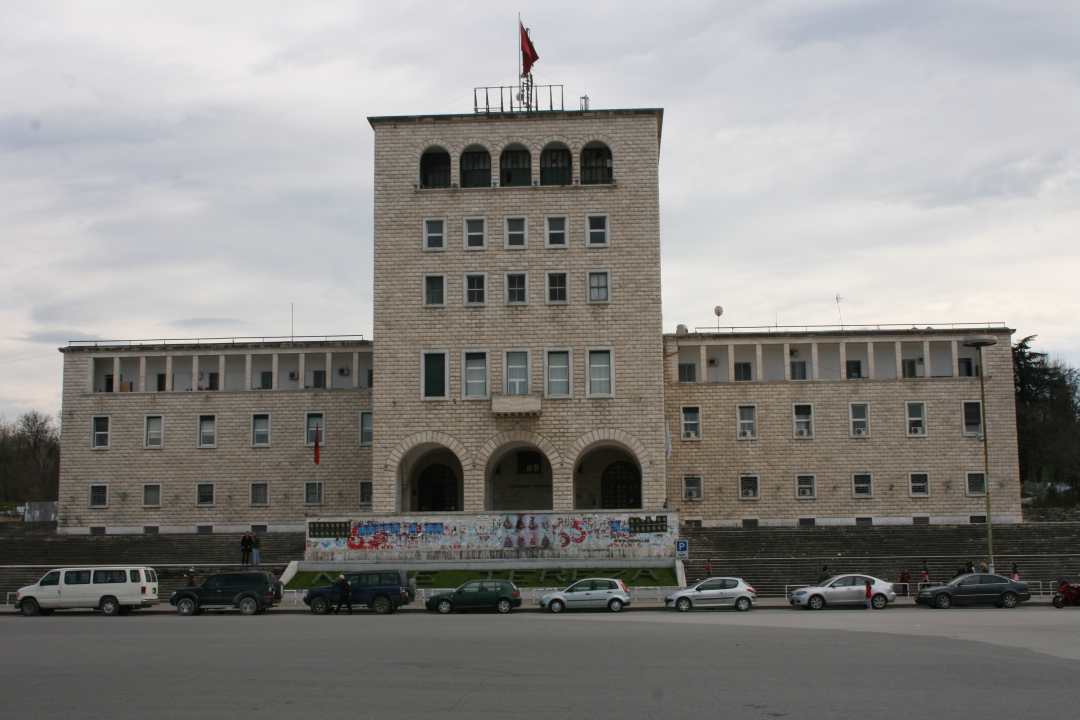
Polytechnic University of Tirana
The Polytechnic University of Tirana is the
oldest university in Albania, founded in 1951. When it was built, illiteracy
was as high as 85% and education had only been nationalized in the 1920’s. Additionally,
that was done to drive political ideology. When this university opened, it was
during the early years of Communism in which its leader, Enver Hoxha, was
asserting his power. The university was a vehicle for consolidating the ideals
of the Stalinist Party of Labour of Albania so Enver Hoxha’s influence on the
minds of the Albanian youth was not small. The 1946 Education Reform Law enacted Marxist-Leninist principles that reinforced
communist ideological propaganda and central government control.
Looking at the clear cut building it is easy to imagine the impression it made on the fresh and nervous faces, those selected few lucky enough to obtain a 3rd level education – The visceral effect of first impressions is powerful, imposing and austere with no room for embellishment or softness. The building itself is distinguished for the Italian Rationalist architecture of Vittorio Ballio Morpurgo, a precursor to the Fascist architectural style of state buildings that pervade the city. It was, and still is, an important part of the complex of the ministry buildings on the main boulevard, and it constitutes an important landmark in the centre of Tirana.
However, as an institution of education it has served its country well and as such this building has become the emblematic symbol of the city. At its heart are the students, who too have served their society. That is why the building was also the symbol of the anti-communist student movement of 1991. On the occasion of celebrating Albania’s centenary, then President Bujar Nishani awarded the University the highest badge of honour for its achievements and contribution to the education of generations of engineering professionals.
Category
Culture
Gallery